THE END OF A COSMIC JOURNEY
The world of rock has fallen silent. On October 16, 2025, the death of Ace Frehley—the original guitarist and co-founder of Kiss—was confirmed. He was 74 years old, and though decades had passed since his wildest tours, the flame that burned within him never truly dimmed. Known globally as “The Spaceman,” Frehley wasn’t merely a musician; he was a phenomenon, a living embodiment of rebellion and creative freedom who changed how rock looked, sounded, and felt.
For millions of fans, his riffs were the soundtrack of youth: distorted, raw, and perfectly imperfect.
His guitar solos were not simply notes—they were lightning strikes that lit up arenas and hearts alike.
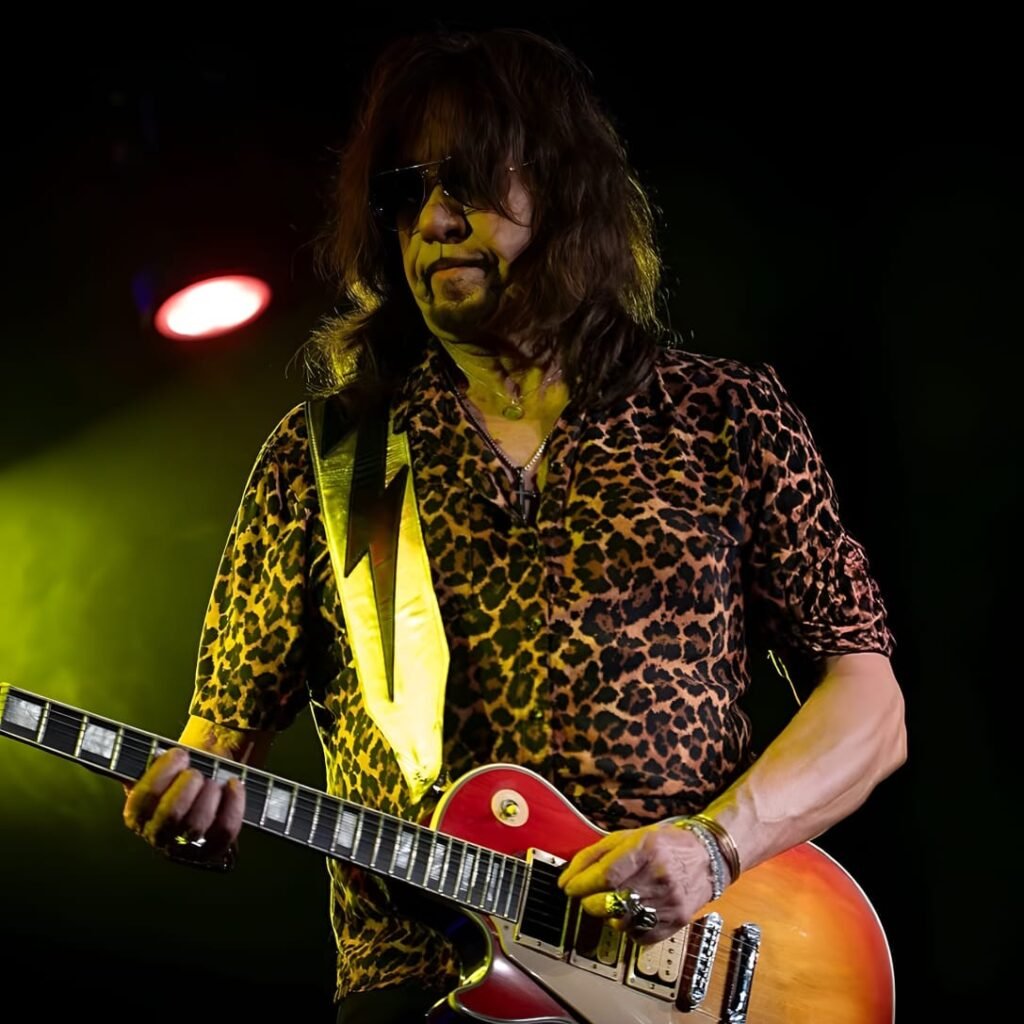
When Frehley stepped on stage with silver makeup, boots of steel, and a Les Paul spewing smoke, audiences knew they were witnessing a man who had taken rock into another dimension.
THE TRAGIC ACCIDENT AND FINAL DAYS
Reports from Associated Press and Reuters reveal that Frehley suffered a devastating fall inside his New Jersey home studio. The accident caused a brain hemorrhage, and despite emergency surgery, he remained in critical condition for several days. Surrounded by his family and lifelong friends, Ace passed away peacefully on the morning of October 16. In a heartfelt statement, his relatives wrote:
“Ace lived his life doing what he loved most—playing music and creating joy for the world. His soul will forever echo in every chord he struck.”
Only weeks before, Frehley had canceled tour dates citing health reasons. Behind the scenes, however, he was still writing and recording. Close collaborators confirmed that several unfinished songs existed, meaning new Frehley music may yet emerge—his final message to the universe.
A LIFE SHAPED BY MUSIC AND STARDOM
Born Paul Daniel Frehley on April 27, 1951, in The Bronx, Ace grew up in a working-class neighborhood where the streets pulsed with rhythm and danger. His parents nurtured his love for art, but it was the guitar that captured his imagination. As a teenager, he immersed himself in the sounds of Jimi Hendrix, The Yardbirds, and Cream, developing a style both melodic and ferocious. By the early 1970s, his technical skill and eccentric flair earned him a reputation in New York’s underground scene. Then fate intervened. In 1973, he answered a newspaper ad placed by Gene Simmons and Paul Stanley—two young dreamers forming a theatrical rock group. From that moment, Kiss was born.
Frehley’s vision gave the band its cosmic identity. He designed the famous lightning-bolt logo, created the “Spaceman” persona, and transformed ordinary concerts into interstellar spectacles filled with smoke, fire, and pyrotechnics. Audiences didn’t just hear Kiss—they experienced it.
THE RISE, THE STRUGGLES, AND THE SOLO YEARS
During the 1970s, Kiss became a cultural earthquake. Albums like Destroyer (1976), Love Gun (1977), and Alive II (1977) defined arena rock. Ace’s songwriting contributed classics such as “Cold Gin,” “Shock Me,” and “Rocket Ride.” In 1978, when each member released a solo record, his album Ace Frehley outsold the other three combined, thanks to the hit “New York Groove.”
But fame came at a price. The endless touring, excesses, and creative clashes took their toll.
By 1982, Frehley left Kiss, seeking freedom from the machinery of superstardom. His departure didn’t silence him—it unleashed him. He formed Frehley’s Comet, releasing Second Sighting and Trouble Walkin’, albums that showcased both his technical prowess and lyrical vulnerability. Through the 1980s and 1990s, Ace built a solo career defined by honesty and survival rather than spectacle.
THE REUNION AND REBIRTH
In 1996, Kiss reunited in full makeup for the Alive/Worldwide Tour. When Frehley stepped back onstage beside Simmons, Stanley, and Criss, fans wept. The chemistry was still there—the fire, the showmanship, the thunderous solos. The reunion album Psycho Circus followed, and the world remembered why Ace Frehley had become a legend. Even after his final departure in 2002, Ace kept creating.
He released Anomaly (2009), Space Invader (2014), Origins Vol. 1 & 2, and finally 10,000 Volts (2024)—an album hailed by critics as his most energetic work in decades. Each release proved that the Spaceman’s fire still burned, his guitar still howled, and his passion for rock remained untouched by time.
MUSICAL STYLE AND INFLUENCE
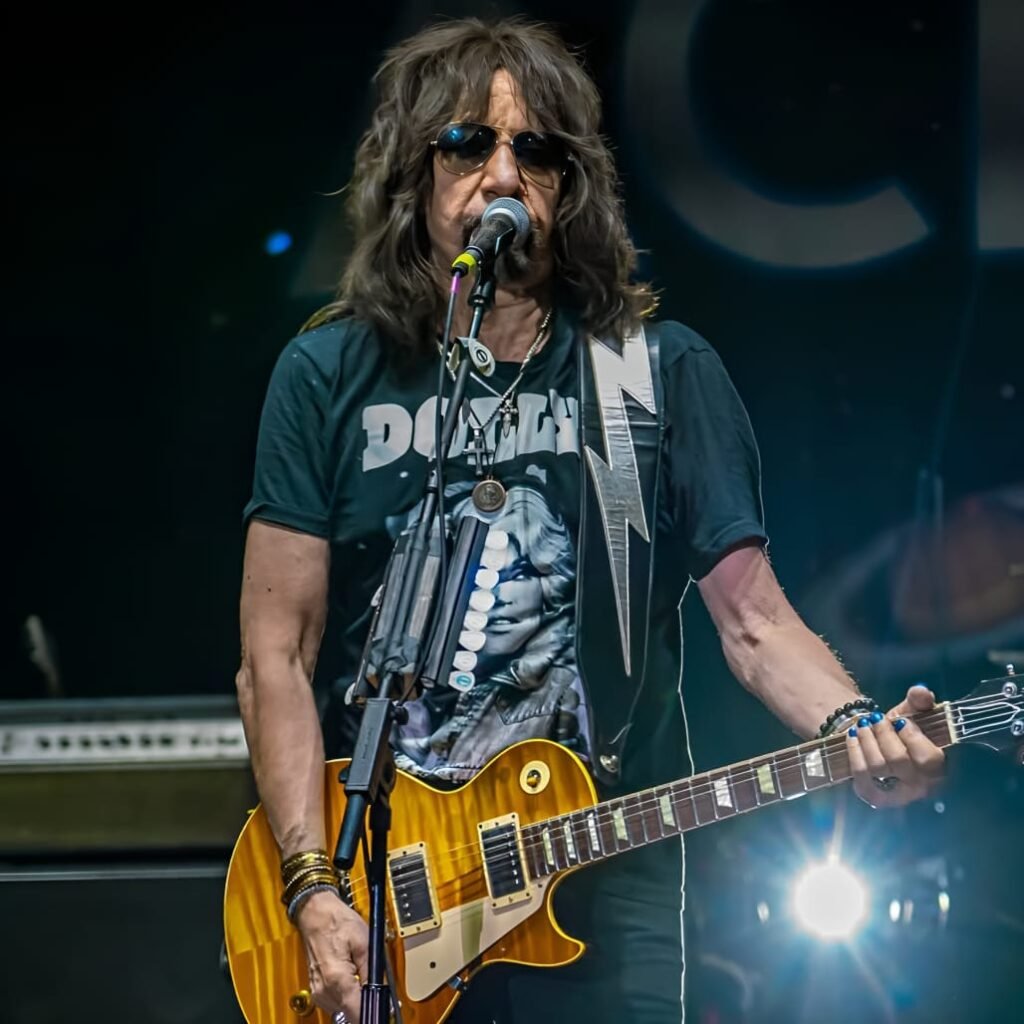
Ace Frehley’s guitar work combined melody, aggression, and cosmic imagination. He was one of the first mainstream guitarists to integrate controlled feedback, echo, and visual performance into a unified show. His tone—a biting midrange roar balanced with blues phrasing—became a template for generations of guitarists. Artists like Slash, Dave Grohl, Joe Perry, and Tom Morello have cited him as a defining influence. Beyond the technical mastery, Ace taught musicians to play with soul—to make the instrument an extension of personality. His showmanship, humility, and humor made him accessible even at the height of fame.
TRIBUTES FROM THE ROCK WORLD
After news of his death broke, tributes flooded social media. Gene Simmons posted:
“We argued, we laughed, we made history. Ace was my brother in sound and spirit. Rock the heavens, Spaceman.”
Paul Stanley wrote:
“There could never be another Ace Frehley. His imagination built the world that Kiss became. Rest among the stars you always loved.”
Messages from Metallica, Aerosmith, Foo Fighters, and countless others celebrated his genius.
Rock stations across the globe devoted full-day specials replaying his greatest moments—proof that his music transcended generations.
A STAR THAT WILL NEVER FADE
Even in death, Ace Frehley continues to inspire. His influence resonates through every young guitarist chasing the dream of stardom, every band daring to be bold, and every fan who still raises a fist when “Detroit Rock City” explodes from the speakers. Ace never cared about perfection; he cared about passion. He believed rock should be dangerous, unpredictable, and alive.
Now, as his light joins the constellations he once sang about, the message remains eternal:
The Spaceman hasn’t gone—he’s simply gone home.