The confession shaking Latin America
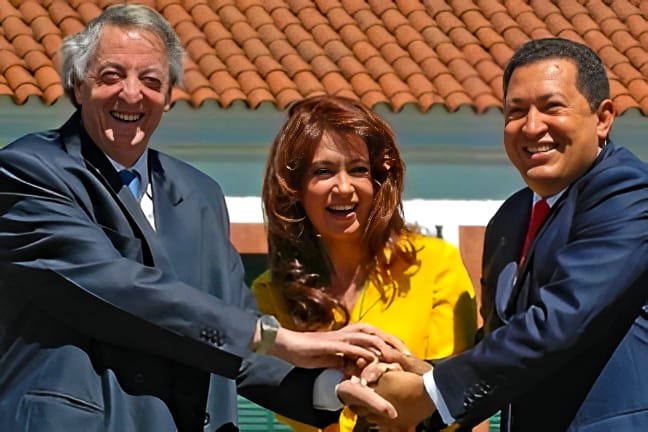
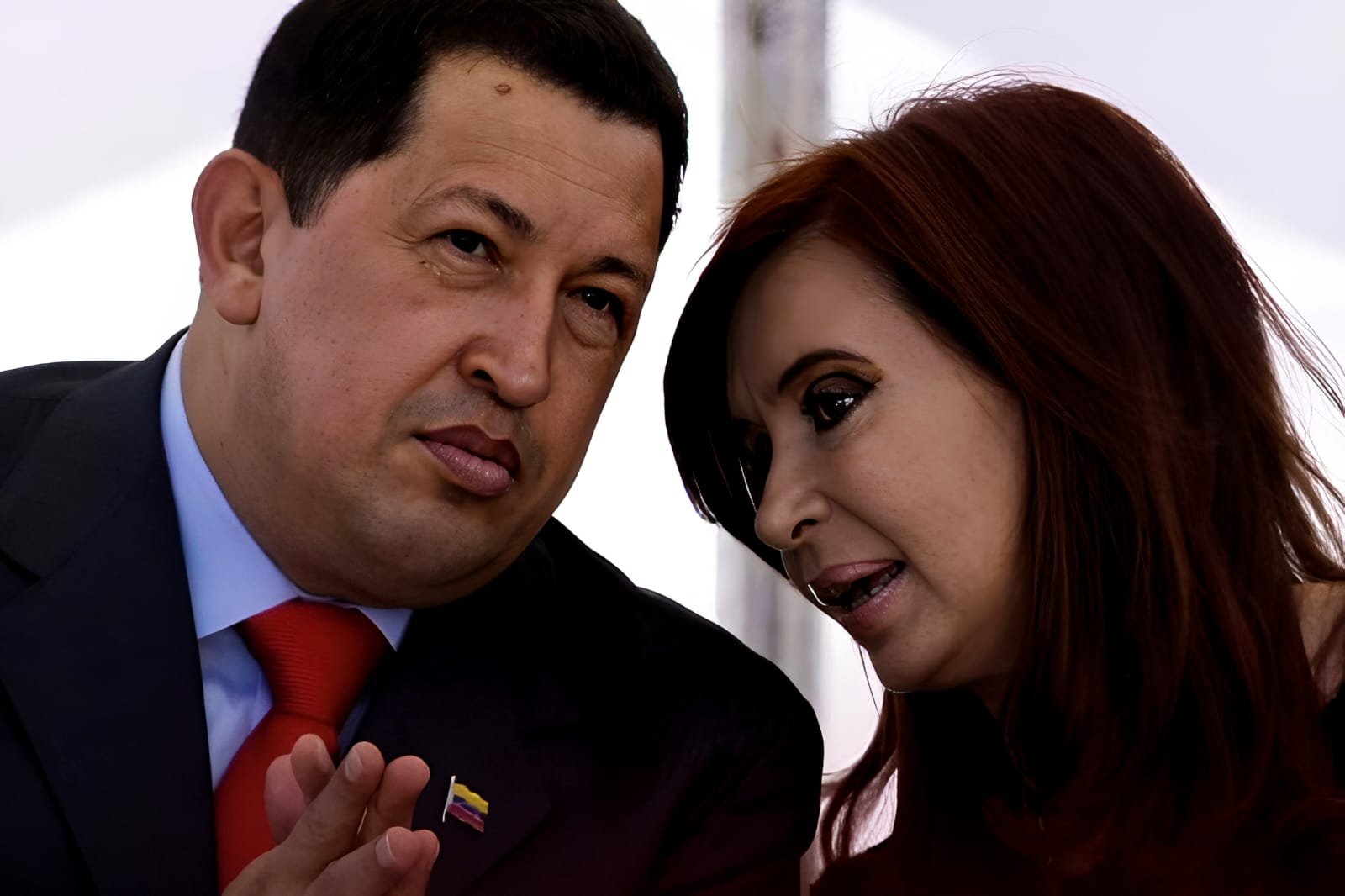
A political earthquake has erupted across the continent. Former Venezuelan intelligence chief Hugo “El Pollo” Carvajal, one of the closest men to Hugo Chávez, has confessed before U.S. authorities that the late Venezuelan dictator financed Cristina Fernández de Kirchner’s presidential campaign in 2007 with $21 million USD.
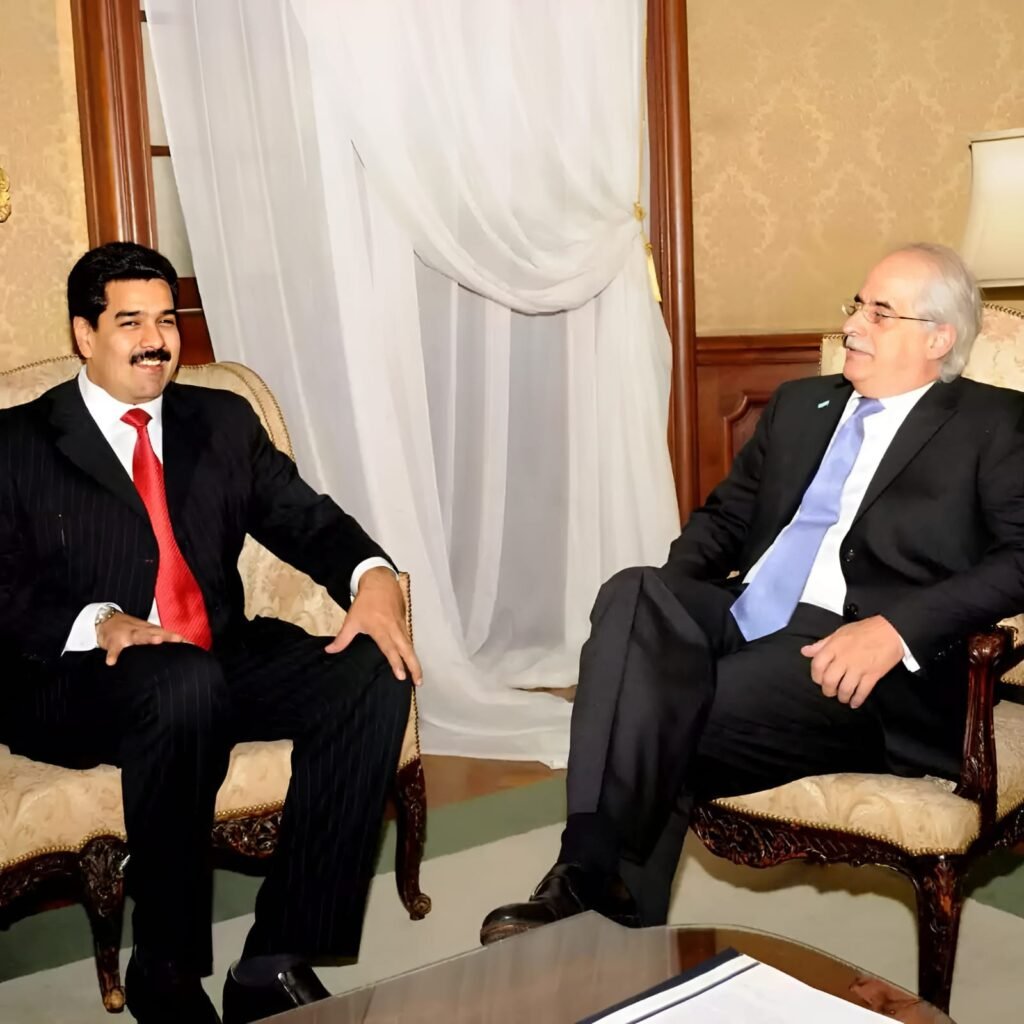
According to his sworn testimony, the money was delivered through 21 secret flights between Caracas and Buenos Aires — during a time when Jorge Taiana, now Argentina’s foreign minister, served as Chávez’s key political ally and architect of the Venezuela-Argentina partnership.
The hidden structure behind the scandal
Carvajal, who was extradited from Spain to the United States, became a pivotal witness in Washington’s investigation into narco-terrorism and money laundering tied to Venezuela’s socialist regime.
He revealed that the Chávez government used PDVSA funds (Petróleos de Venezuela) to secretly finance political movements and campaigns across Latin America, aiming to export the Bolivarian Revolution beyond its borders.
In this particular case, Carvajal described how the funds were transported aboard official state flights and diplomatic pouches, allegedly with help from senior Argentine and Venezuelan officials. Each flight carried about $1 million USD, summing up to the total $21 million that allegedly powered Kirchner’s victory.
Names that echo across the region
The testimony directly implicates Jorge Taiana and several high-ranking figures linked to both Chávez’s inner circle and the Argentine foreign ministry.
This revelation aligns with the infamous “Antonini Wilson suitcase scandal,” when a Venezuelan businessman was caught entering Buenos Aires with $800,000 in cash supposedly intended for Kirchner’s campaign.
Carvajal’s confession strengthens what many analysts had suspected for years: a regional network of corruption and political financing controlled from Caracas.
Washington’s hand in the investigation
The confession forms part of Carvajal’s plea bargain with U.S. prosecutors, where he agreed to cooperate in exchange for a potential sentence reduction.
As Chávez’s former head of military intelligence, Carvajal handled sensitive information about drug routes, secret accounts, and political operations linked to the Venezuelan regime.
The U.S. Department of Justice has long pursued evidence of how Chávez and later Nicolás Maduro allegedly channeled drug-money profits into foreign political campaigns.
These new revelations could reopen criminal investigations in Argentina and Venezuela, shaking diplomatic relations throughout the region.
Tension and silence in Buenos Aires and Caracas
In Argentina, President Javier Milei’s administration has not yet commented, but local opposition leaders are demanding a full judicial inquiry.
Milei, a fierce critic of Kirchnerism, previously stated that “the Kirchner model represents the decay of Argentina’s moral and economic values.”
Meanwhile in Caracas, Nicolás Maduro’s government — the ideological heir to Chávez — dismissed Carvajal’s statements as “an imperialist smear campaign.” Yet the silence from key Chavista officials suggests growing unease as international pressure builds.
A continental network of power and money
Carvajal’s testimony didn’t stop at Argentina. He also named Bolivia, Ecuador, Nicaragua, and El Salvador as other nations that allegedly received secret Venezuelan funding.
The goal, he explained, was to build a political alliance of socialist governments loyal to Chávez’s vision — the so-called “21st-Century Socialism.”
Analysts argue this revelation confirms what regional opponents had denounced for years: a transnational strategy of influence financed by oil money and illicit trafficking.
Regional and global reactions
In Colombia, Senator María Fernanda Cabal called the revelation “proof of the narco-financing that poisoned democracy across the continent.”
In Venezuela, opposition leader María Corina Machado said the confession “exposes the real nature of Chavismo — a criminal network disguised as a revolution.”
In Washington, several U.S. Republican senators urged further investigation into Cristina Kirchner’s alleged involvement in money laundering and illicit funding from Venezuela, viewing it as part of the global fight against narcoterrorism.
Conclusion: a historic political earthquake
Carvajal’s confession not only revives the darkest chapters of Chavismo but could reshape Latin American politics for years to come.
If the evidence is confirmed, it would represent one of the most significant political-financing scandals in modern Latin American history — implicating two of the region’s most powerful figures.
The myth of Hugo Chávez as a revolutionary leader is once again overshadowed by accusations of corruption, drug trafficking, and manipulation of democratic institutions.
The region — and the world — now watches as this global political bombshell continues to detonate.